
 Deutsch
  Türkçe
- Home
- Corporate
- Location
- Albania Laser Cutting
- Bulgaria Laser Cutting
- Dubai Laser Cutting
- England Laser Cutting
- France Laser Cutting
- Germany Laser Cutting
- Greece Laser Cutting
- Istanbul Laser Cutting
- Kosovo Laser Cutting
- Kuwait Laser Cutting
- Malta Laser Cutting
- Romania Laser Cutting
- Russia Laser Cutting
- Saudi Arabia Laser Cutting
- Spain Laser Cutting
- Turkey Laser Cutting
- Ukrainian Laser Cutting
- USA Laser Cutting
- Location
- Our Services
- FAQ
- Certificates
- Contact
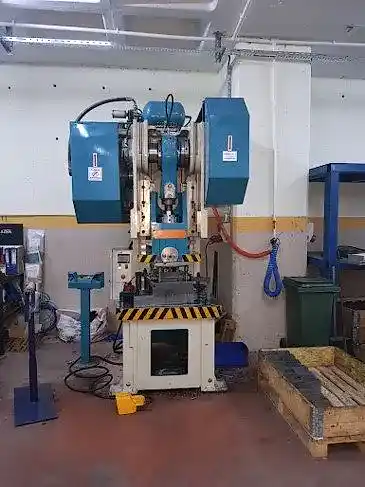
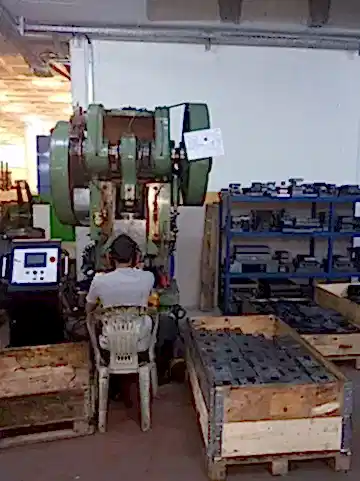
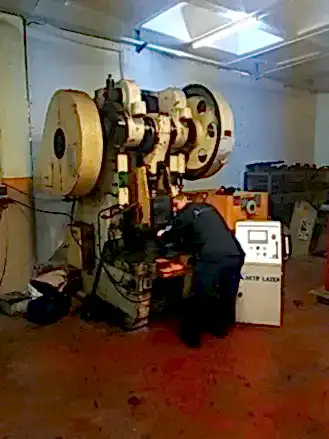
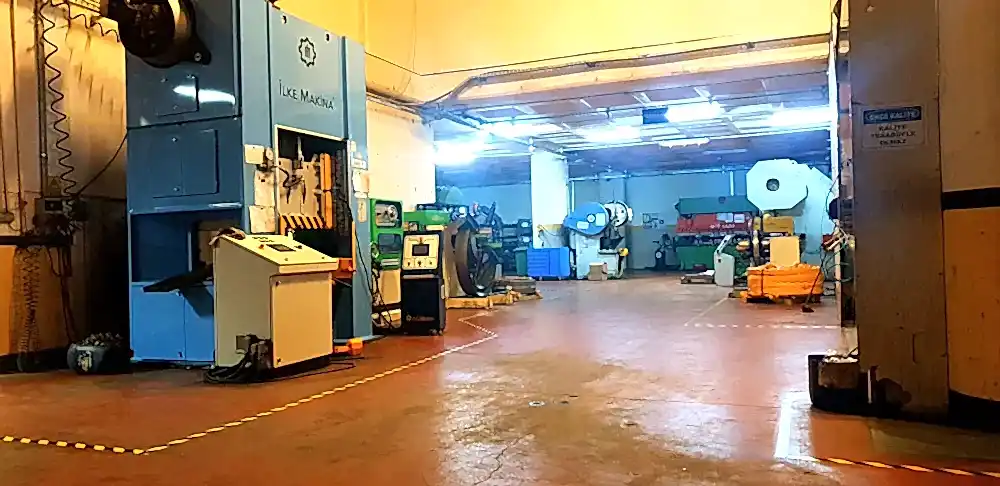
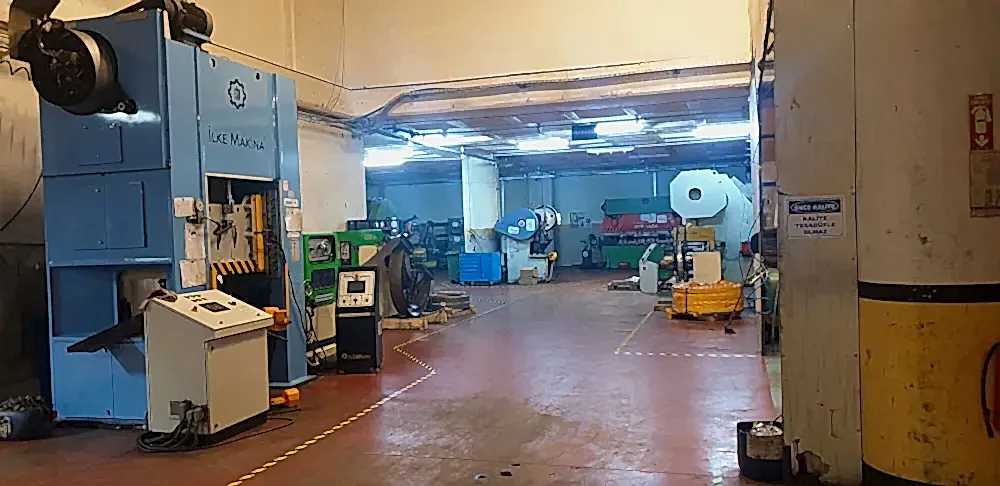
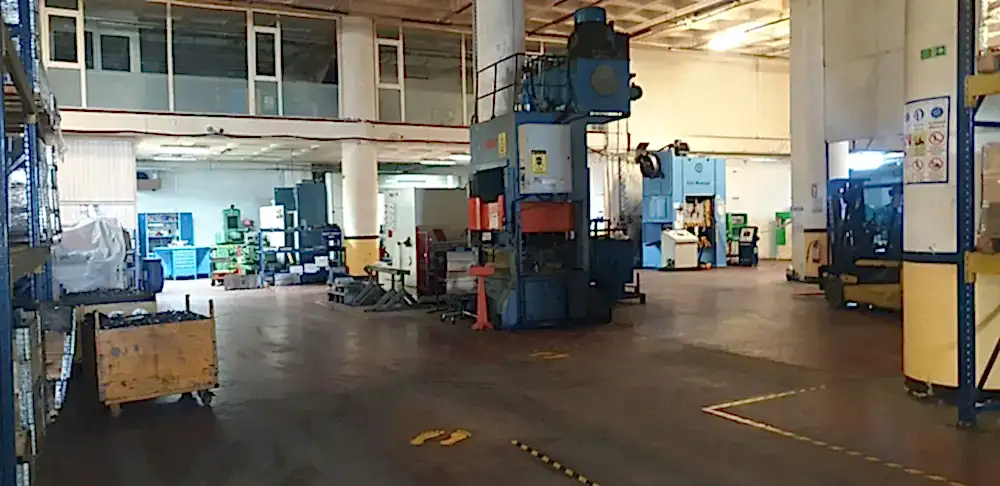
In our section known as the Press Shop, where press machines are located, the products created in the tooling department are shaped, cut, and deep drawn. Production with press machines is both rapid and cost-effective. Our press machines, which operate with a zero-error principle, not only ensure fast production but also provide precise shaping at affordable costs.
Within the Press Shop, pre-prepared molds are processed using methods such as eccentric press and hydraulic press for cutting, bending, drawing, or deep drawing operations.
Press machines consist of two components: the upper and lower parts, often referred to as male and female dies. The material to be processed is placed on the lower die, and when the upper die applies pressure to the lower part, the metal takes the desired shape. Press brakes used for bending sheets are called press brake machines.
Press power is expressed in tons. Below, you can see the production volume in our Press Shop over the years.
Increase in Press Shop Production Over the Years
| 2017 | 2018 | 2019 | 2020 | |
| Black Sheet | 1300 Tons | 1500 Tons | 1800 Tons | 2000 Tons |
| Aluminum | 5 Tons | 6 Tons | 10 Tons | 11 Tons |
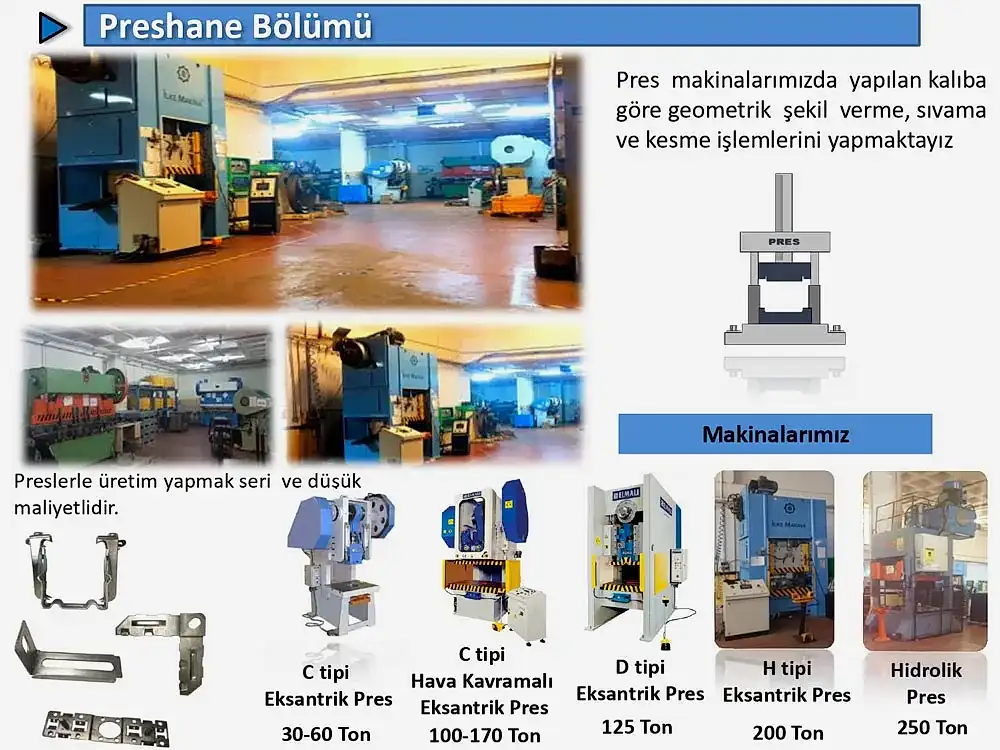
The production capacity of our press machines increases every year, and customer satisfaction with these machines is exceptionally high. The press machines used in our company include:
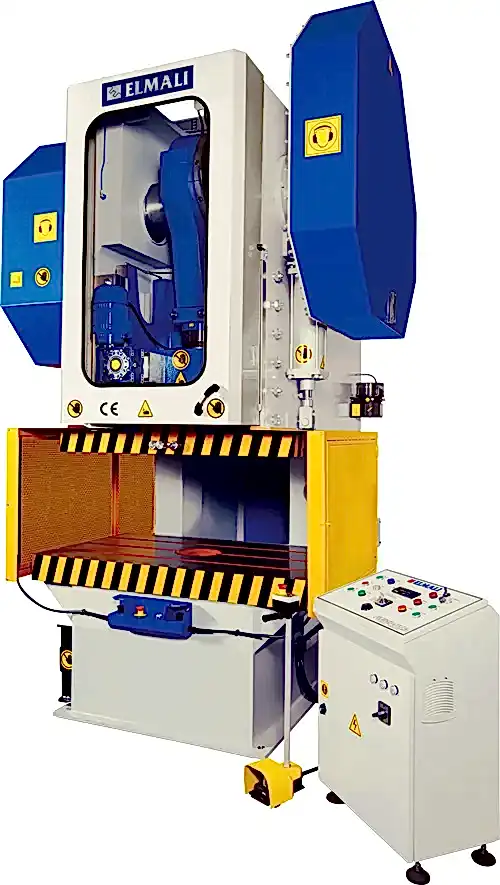
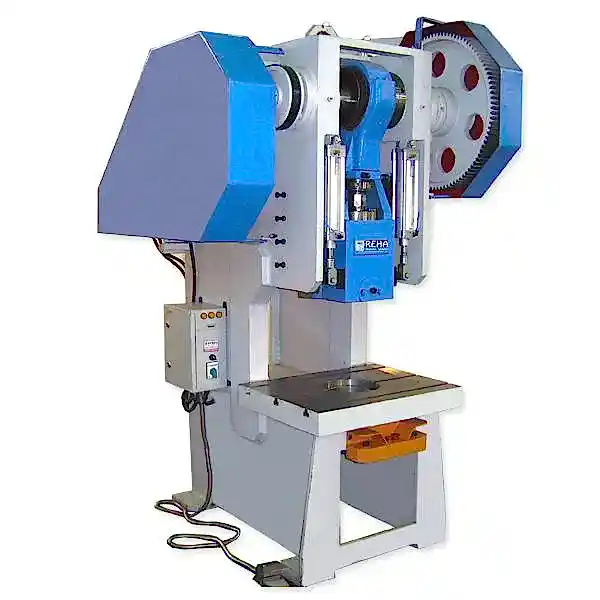
- C-Type Eccentric Press (30–175 Tons)
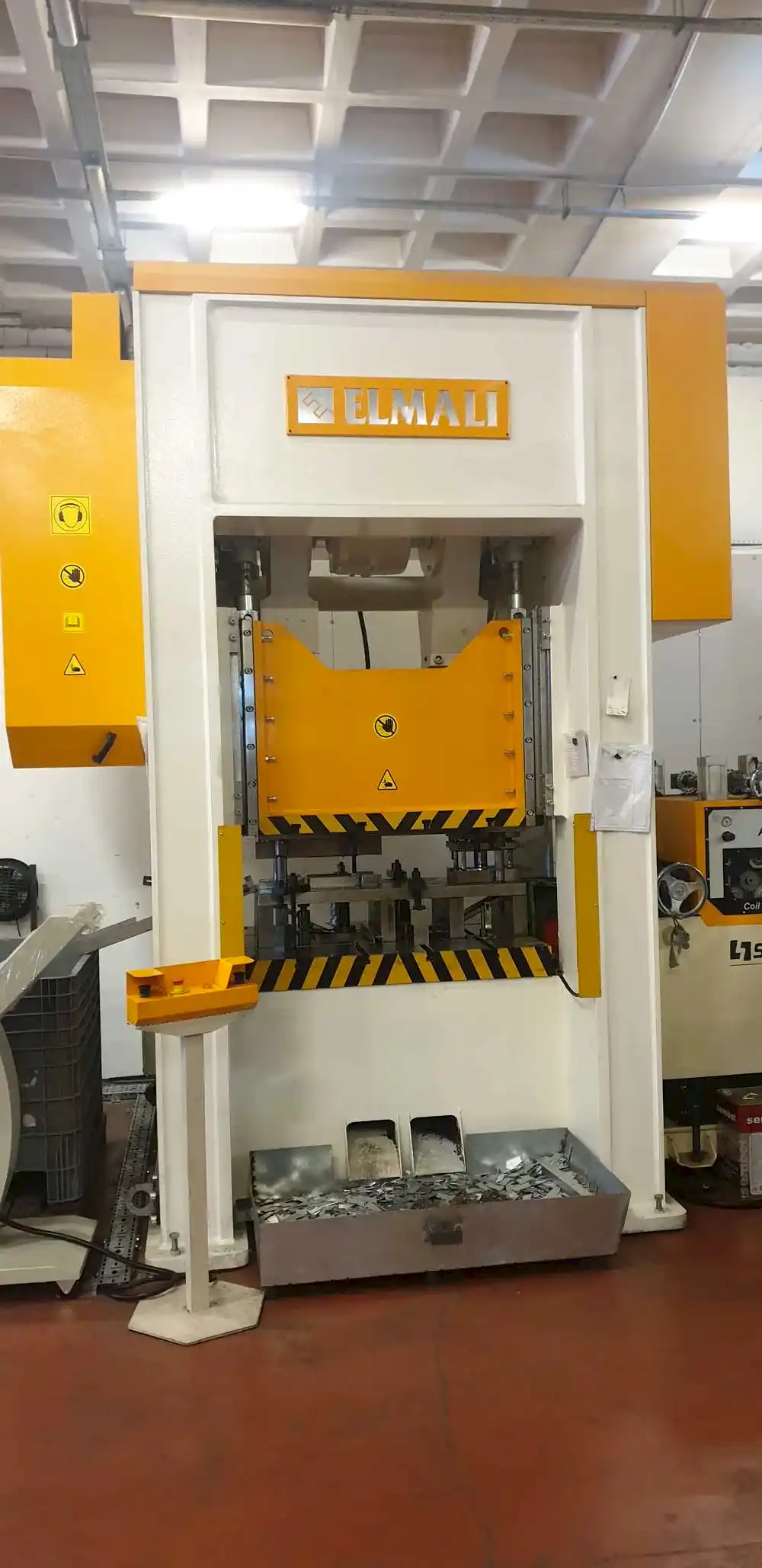
- H-Type Eccentric Press (200 Tons)
- Hydraulic Press (250 Tons)
In our facility, we use H-type and eccentric presses to shape, deep draw, and cut sheet metal through molding. We have 200-ton H-type presses and C-type eccentric presses ranging from 30 tons to 175 tons.
Our goal is to provide the highest quality service with eccentric, hydraulic, and press brake machines. We shape molds produced in our toolshop with our press machines, creating forms requested by our customers.
In our sheet metal shaping section, we use hydraulic and mechanical presses ranging from 30 tons to 250 tons to produce various sheet metal parts of different dimensions.
In our Press Shop, we also handle custom production upon customer request, in addition to mass production.
After the press process, the electrostatic powder coating phase begins.
What is a Press Shop?
In simple terms, sheet metal press forming (or metal fabrication) involves processes related to burning, cutting, or welding sheet metal. The goal is to form a specific shape while preserving the overall quality and strength of the metal.
The processes in a Press Shop are manufacturing methods used to turn flat metal sheets into specific shapes. These involve various metal shaping techniques, such as cutting, punching, and bending.
Whether bending sheet metal or shaping pipes, metal fabricators can create everything from locomotives to laboratory furniture. Depending on the tools and expertise of the supplier, a wide variety of custom products can be designed and produced.
Sheet metal pressing is a quick and cost-effective solution for large-scale production needs. Manufacturers looking for metal parts press services often prioritize three main features:
- High Quality & Durability
- Cost Efficiency
- Fast & Mass Production
What are the Steps in the Pressing Process?
Pressing involves placing coil or flat sheet metal into a press. In the press, a tool and die surface form the metal into the desired shape. Techniques such as punching, cutting, bending, stamping, and embossing are used to shape the metal.
Before shaping the material, stamping professionals must design the tools using CAD/CAM engineering technology. These designs must be as precise as possible to maintain optimal part quality and ensure each bend has the proper clearance. A single tool 3D model can include hundreds of parts, making the design process often complex and time-consuming.
Once the tool design is finalized, a manufacturer can use various machining, grinding, wire EDM, and other production services to complete production.
Custom Sheet Metal Press Production
Custom Sheet Metal Press Production refers to metal shaping processes that require specialized tools and techniques to produce parts specified by the customer. A wide range of industries and applications use custom press processes to meet high-volume production needs while ensuring all parts meet exact specifications.
What is a Hydraulic Press?
A hydraulic press operates using oil pressure. The applied oil pressure shapes the sheet metal plate. Shaping, molding, and forming processes are performed with a hydraulic press. Compared to mechanical presses, it is a more favorable system. Hydraulic presses apply compressive forces of 50 tons or more to shape metals.
Products that can be made with a hydraulic press include:
- Sinks
- Cylinders
- Pots
- Tray Tables
- Car Doors
- Satellite Dishes
- Radiator Panels
- Plywood
And many other products can be manufactured with a hydraulic press.
Why Choose a Hydraulic Press?
A hydraulic press applies a more stable force to the material, reducing error rates in production. The press speed can be adjusted to operate with smaller motors.
What is an Eccentric Press?
The eccentric press method operates based on the principle of an electric motor. These are press machines with a closed body structure (die working space). They are usually made with steel bodies. High-tonnage presses are designed in C-type and H-type body shapes.
How Does a Hydraulic Press Machine Work?
A hydraulic press machine contains pumps driven by an electric motor. These pumps push oil into the system, and directional valves control the hydraulic press machine. A hydraulic press machine can operate in a stepwise or automatic mode. In the stepwise mode, the hydraulic press is operated manually by pressing buttons. The automatic hydraulic press is operated using a pedal.
Hydraulic Press Prices
Hydraulic press prices depend on the type of product to be shaped. Hydraulic press machines can perform forging, fragmenting, punching, deep drawing, and metal shaping processes. The pricing for these processes varies. For hydraulic press prices, please contact us.
Eccentric Press Prices
Eccentric press prices vary based on C-type and H-type eccentric press machines. For the most affordable eccentric press prices, feel free to contact us.
[helpie_faq group_id='12'/]
Information & Request Form
High-Quality Machining
Tepeören ITOSB Neighbourhood, Recep Bilal HANCI Street, No:19, Tuzla - Istanbul / Turkey
bilgi@tinmutef.online
© Developed By DATco Digital All Rights Reserved.