
 Deutsch
  Türkçe
- Home
- Corporate
- Location
- Albania Laser Cutting
- Bulgaria Laser Cutting
- Dubai Laser Cutting
- England Laser Cutting
- France Laser Cutting
- Germany Laser Cutting
- Greece Laser Cutting
- Istanbul Laser Cutting
- Kosovo Laser Cutting
- Kuwait Laser Cutting
- Malta Laser Cutting
- Romania Laser Cutting
- Russia Laser Cutting
- Saudi Arabia Laser Cutting
- Spain Laser Cutting
- Turkey Laser Cutting
- Ukrainian Laser Cutting
- USA Laser Cutting
- Location
- Our Services
- FAQ
- Certificates
- Contact
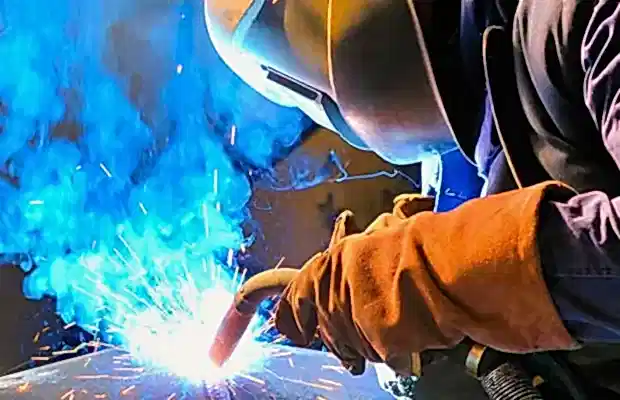
Laser cutting operations are completed with a welding stage upon special request. The welding process can be carried out in various ways. Some welding applications are performed using portable devices, while others are done at the production site.
Welding is the process of joining produced materials under the influence of heat and pressure. Its usage is quite common. It is possible to perform welding applications on different materials (metal, steel, etc.). At this point, when performing welding, it is not necessary for the materials to be of the same size or the same type. Different materials can be joined together through welding.
The only point to note is that the melting points of the materials should be close to each other. This is because welding is essentially a joining process through melting, and the melting points of the materials to be welded should be equal or close to each other.
If you have projects that require completion with laser cutting and welding works, all you need to do is contact Aktif Lazer.
What Are the Types of Welding Applications?
Welding is the process of joining metal and thermoplastic materials by melting them together. Depending on the materials used, there are various types of welding methods. Welding applications are particularly common in the manufacturing and industrial sectors. It is especially the most preferred method of joining after laser cutting applications.
The primary reason for the variety of welding methods is the differing melting points of the materials to be welded. Below, we will explain the welding types we use in the manufacturing industry.
Aktif Lazer offers various welding methods, including gas metal arc welding, argon welding, and spot welding.
- Gas Metal Arc Welding (GMAW)
This is one of the most widely used welding methods. It is called gas metal arc welding because the area to be welded is protected with gases during the welding process, preventing external contamination from air or other sources. MIG (Metal Inert Gas) and MAG (Metal Active Gas) methods are used for gas metal arc welding.
MIG (Metal Inert Gas): This welding method uses inert gases (Helium and Argon) and is not preferred for steel applications.
MAG (Metal Active Gas): This welding method uses CO2 and mixed gases and is suitable for welding steel and alloy materials.
- Argon Welding
Also known as TIG (Tungsten Inert Gas) welding, this method is used to join metals with high melting points. It is commonly applied to hard metals such as steel, chrome, and nickel. TIG welding is a fast and efficient method.
During TIG welding, argon gas is used as a protective agent to prevent material reactions. Stainless steel, aluminum, and nickel alloys can be welded easily. If your projects require high-quality standards, argon welding is an excellent choice.
- Spot Welding
This is the process of joining two metals without requiring filler material (such as solder or welding rods). Spot welding does not cause deformation and is considered a flawless welding technique.
Compared to other welding methods, it is easier and faster, providing efficient production. No additional materials are required during the process, as it is applied directly through the melting method. After heating and melting the metal, the spot welding process is completed.
It takes only 3-4 seconds to join two parts using the spot welding method, making it especially useful for welding iron products.
What Are the Advantages of Welding Applications?
- Welding is a highly effective joining method.
- Welded materials are durable and long-lasting.
- It is a reliable process.
- Provides fast production (large parts can be easily welded together).
- Welded products have smoother and more even surfaces.
- Production errors can be easily corrected.
- Creates inseparable joints, enhancing the durability of structures.
How Is Welding Done?
Welding is the process of joining metals by heating and melting them. Electricity is used for this process. This allows two metal parts to be joined, completing the welding process.
Proper safety precautions must be taken before welding. For example, use a welding mask, heavy-duty welding gloves, a leather apron, and protective goggles. Also, ensure the welding area is well-ventilated.
Before starting, clean any rusted surface on the metal to be welded. Sandpaper can be used for this task.
To begin welding, position the metal at a 20-degree angle to the surface. Once the welding machine is active, sparks will be generated, so protective equipment must be used carefully. The welding process can be completed by drawing small circles on the metal surface.
How to Use Welding Goggles?
Welding goggles should be worn before starting the welding process. Usually made of plastic, ensure the goggles fit snugly over your eyes before beginning. Welding goggles protect your eyes from the sparks generated during welding.
How to Use a Welding Mask?
A welding mask, like goggles, should be worn before starting the welding process to protect your entire face from flying sparks. When purchasing a welding mask, consider specific factors. For instance, auto-darkening filter masks make welding easier. The lens transition speed is crucial; a lens transition speed of #3 or #4 allows quick shading, facilitating easy focusing and efficient work.
What Are the Differences Between Gas Metal Arc Welding Machines and Inverter Welding Machines?
Gas metal arc welding machines use a wire for welding. During the welding process, the wire melts to create the weld metal. The primary advantage of gas metal arc welding is that the welded area is not exposed to air, making it unaffected by environmental conditions. Examples include MIG welding, TIG welding (argon welding), and MAG welding.
Inverter welding machines use high-frequency current. Their main advantages are low power consumption, compact size, and lightweight design. Welding is performed with high quality, but these machines tend to be more expensive.
What Helps with Weld Burns on the Eyes?
Natural remedies can be used to treat weld burns on the eyes.
- Apply a spoonful of yogurt to the eye (leave it for half an hour, then wash).
- Place a potato slice over the eye to relieve pain.
- Tea bags can also soothe weld burns as they contain antioxidants.
Where Are Welding Applications Used?
The usage area of welding applications is so vast that you can see parts created through these applications almost everywhere you look.
For example, in the apartment building you live in, welding is the primary method used to join steel construction parts.
- Construction of massive skyscrapers
- Building of stadiums
- Manufacturing of playgrounds
- Production of benches
- Creation of metal panel fences
- Construction of airports
- Shipbuilding
In short, it is a joining method used primarily for metal and steel applications.
Information & Request Form
High-Quality Machining
Tepeören ITOSB Neighbourhood, Recep Bilal HANCI Street, No:19, Tuzla - Istanbul / Turkey
bilgi@tinmutef.online
© Developed By DATco Digital All Rights Reserved.